This is part of our Essential Guide to Coding Qualitative Data | Take Our Free Online Qualitative Data Analysis Course | Start a Free Trial of Delve
Qualitative research goes deep on a specific group of people in a specific place and time. That depth is the point, but eventually someone asks the harder question: if your findings came from those particular participants, do they mean anything for anyone else?

In quantitative work the answer is generalizability, where you claim what held for the sample holds for the wider population. Qualitative research answers the same question differently, through transferability. The two get used as if they were the same thing, but the difference changes what your job as the researcher actually is during your project.
Much of transferability comes down to capturing enough of your context that a reader can judge whether your findings fit their setting. Let’s walk through what transferability asks for, how to meet it, and how a tool like Delve keeps those notes organized for when you write up your results.
What transferability in qualitative research means
Transferability is the extent to which your findings can carry over to another context, another group, or another setting. Lincoln and Guba (1985) introduced it as the qualitative counterpart to generalizability, one of four criteria they proposed for establishing trustworthiness.
A quantitative study claims its results generalize, and the researcher carries that claim. Transferability moves the decision to the reader. You don’t argue that your findings apply everywhere. You describe your study in enough depth that someone else can judge whether it fits their own situation. Your job is to give them enough context to make that call.
That depth has a name. “Thick description” means writing your participants, setting, and methods richly enough that a reader can picture the context and weigh the fit. Not just who your participants were, but:
- The circumstances they were in.
- The conditions you collected data under.
- The things that shaped what they said.
The important part is that a reader working in a similar setting can see the overlap and decide the findings transfer, while a reader in a different one can see why they might not.
Example of transferability in qualitative research
A 2022 open-access study in BMC Health Services Research shows how this works. Researchers interviewed 25 people about barriers to healthcare for those with chronic conditions in Austria, and found that an urban-rural divide and poor patient-provider communication kept people from getting timely care.
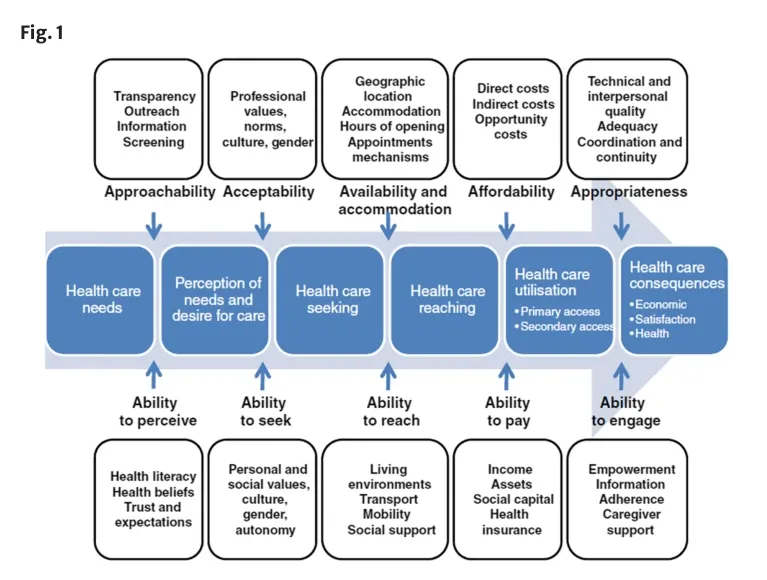
[Credit - BMC Health Services Research (Schwarz et al.)]
On its own, that finding is about Austria. What makes it transferable is the thick description around it. The researchers laid out their context in detail, from how the Austrian healthcare system is structured to their participants’ socioeconomic circumstances. So a researcher studying rural healthcare access somewhere else can read that context, compare it to their own, and decide for themselves whether the findings might carry over.
The study never claims to apply everywhere. It gives readers enough to make that call themselves, which is exactly what transferability asks for. The 25 interviews was enough because the reach of the study came from the depth of its context, not the size of its sample.
Why qualitative work doesn’t chase statistical generalizability
That distinction, depth over sample size, is one Braun and Clarke feel strongly about. They push back on the instinct to treat a small sample as a limitation, arguing qualitative researchers shouldn’t frame the lack of statistical generalizability as a flaw, since it applies a standard built for a different kind of research.
Reviewers don’t always see it that way. Plenty of journals still expect a limitations section that names the sample size, and plenty of committees still ask whether findings generalize. Knowing the argument gives you something to say when that comes up.
Quantitative generalizability depends on a sample that represents a wider population, and the work is measured by how far it reaches beyond the specific people studied. Qualitative research treats context as central rather than as noise to control for or filter out. The meaning is bound up in the particular setting, the particular people, the particular moment, and stripping that away to make a population-level claim would throw out the thing that makes the work valuable.
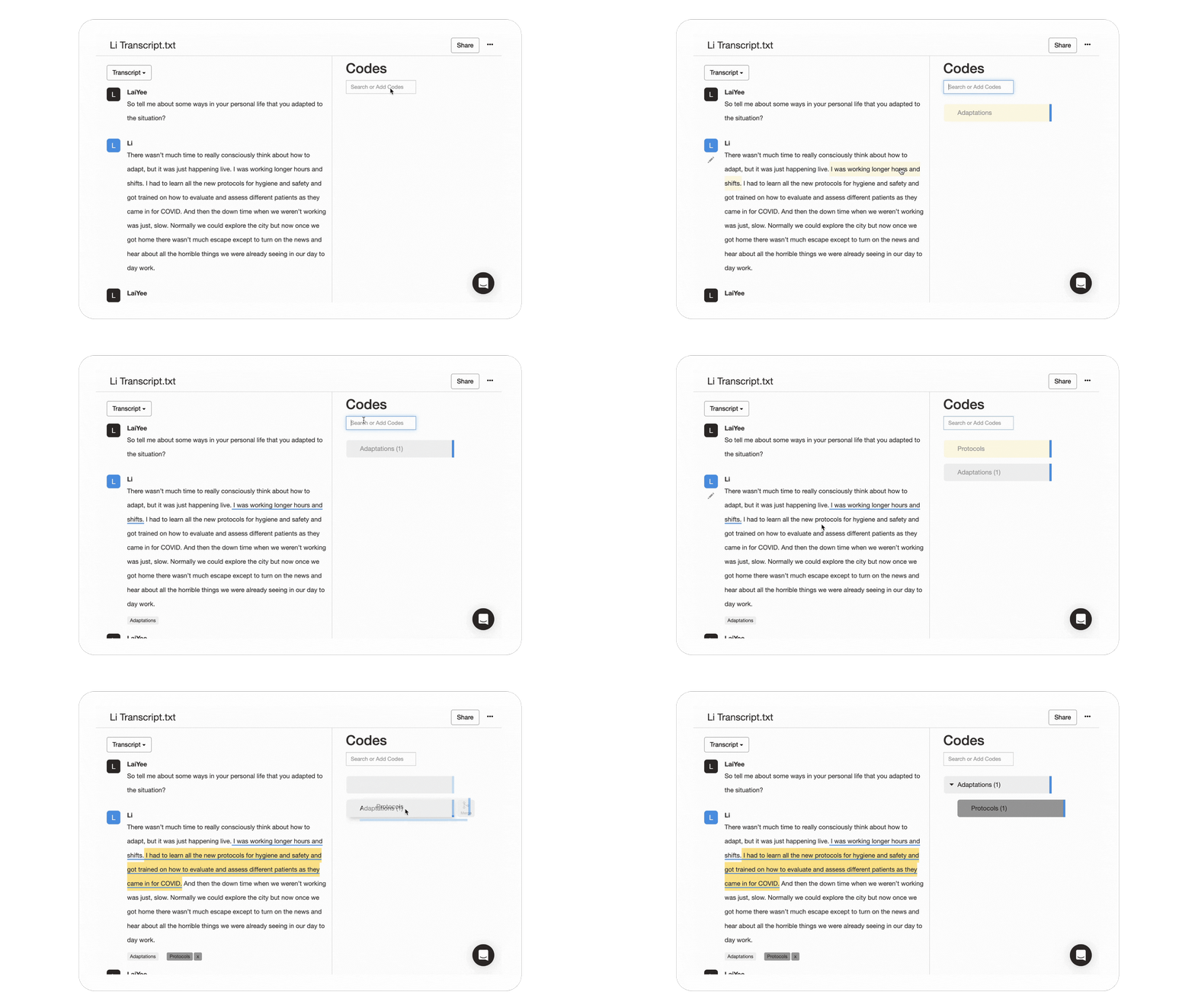
Qualitative analysis can sometimes still count how often a code appears or map where codes overlap to look for patterns. Tools like Delve make it easy to see these patterns. These insights can help uncover meaning. But transferability isn’t asking for numbers. It’s asking for context rich enough that a reader can judge the fit themselves.
Where frequency sometimes fits in
Counting has its place in some qualitative studies, just not as the endpoint. In qualitative content analysis, frequency is a tool that tells you which concepts show up often enough to look at closer. But frequency just points you toward what deserves probing, and it isn’t the finding itself. Research that stops at counting is quantitative content analysis, and it answers a different question than transferability does.

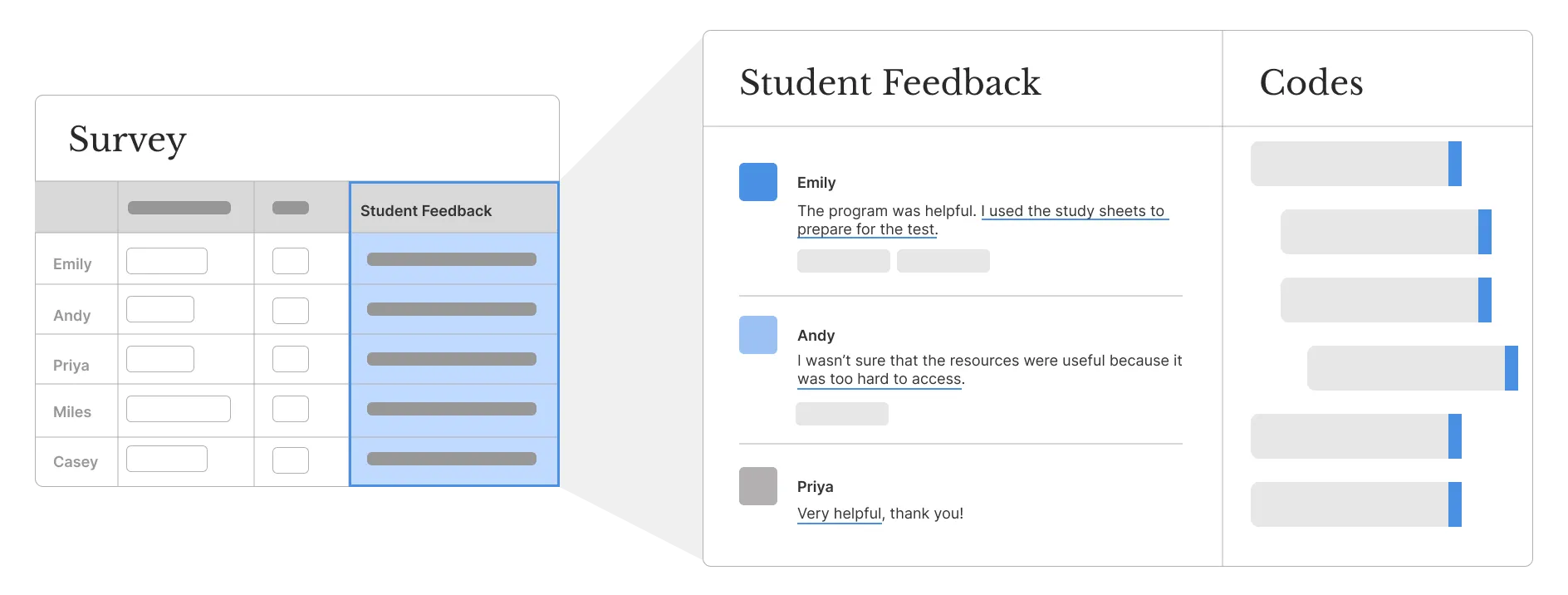
The same goes for when you analyze survey responses. You might tabulate how often a theme recurs across open-ended answers, and that tally still teaches you something about your data. It just plays more of a supporting role. The frequency shows you a pattern, while the transferable insight comes from the context you write around it.
Transferability across different methods
Every qualitative method aims to give enough context for readers to judge the fit. What changes is how each qualitative method gets you there:
- In reflexive thematic analysis, Braun and Clarke treat your perspective as part of the analysis rather than something to remove, so a transferable write-up includes not just your participants and setting but the interpretive lens you brought to them.
- Grounded theory builds a theory up from the data, and its wider relevance rests on describing the conditions that theory emerged from. The more clearly you situate where and how it took shape, the better a reader can weigh whether it extends to their setting.
- Interpretive phenomenological analysis is built on an idiographic commitment, meaning it treats each participant on their own terms before looking across cases. It builds toward wider relevance one detailed case at a time, so any broader insight stays tied to the individual accounts behind it.
These follow different routes to the same destination.. Braun and Clarke describe several forms of qualitative generalizability that work this way, based around reflexivity and engaging with your data. The goal is to provide rich, situated detail rather than sample size.
Writing for transferability with your records
Transferability usually comes last, after you’ve done the work of building credibility, dependability, and confirmability into your analysis. Those are the precursors within Lincoln and Guba’s framework.
By the time you get to transferability, most of the checks are behind you. What’s left is describing your context well enough that others can use it. That thick description is a writing task, but the writing is only as good as what you kept while you worked. A rich account of your context doesn’t appear at the end. It comes from the notes you took along the way.
This is where reflexivity and documentation feed into transferability. The memos you write while coding, capturing the setting, the conditions, and your decisions, become the raw material for the thick description you write up later. In Delve, those memos attach directly to the transcript excerpts that prompted them, so the context stays tied to the exact data it came from instead of scattered across separate notes. These details describe your context, which is what lets a reader trust that your findings could travel to theirs.
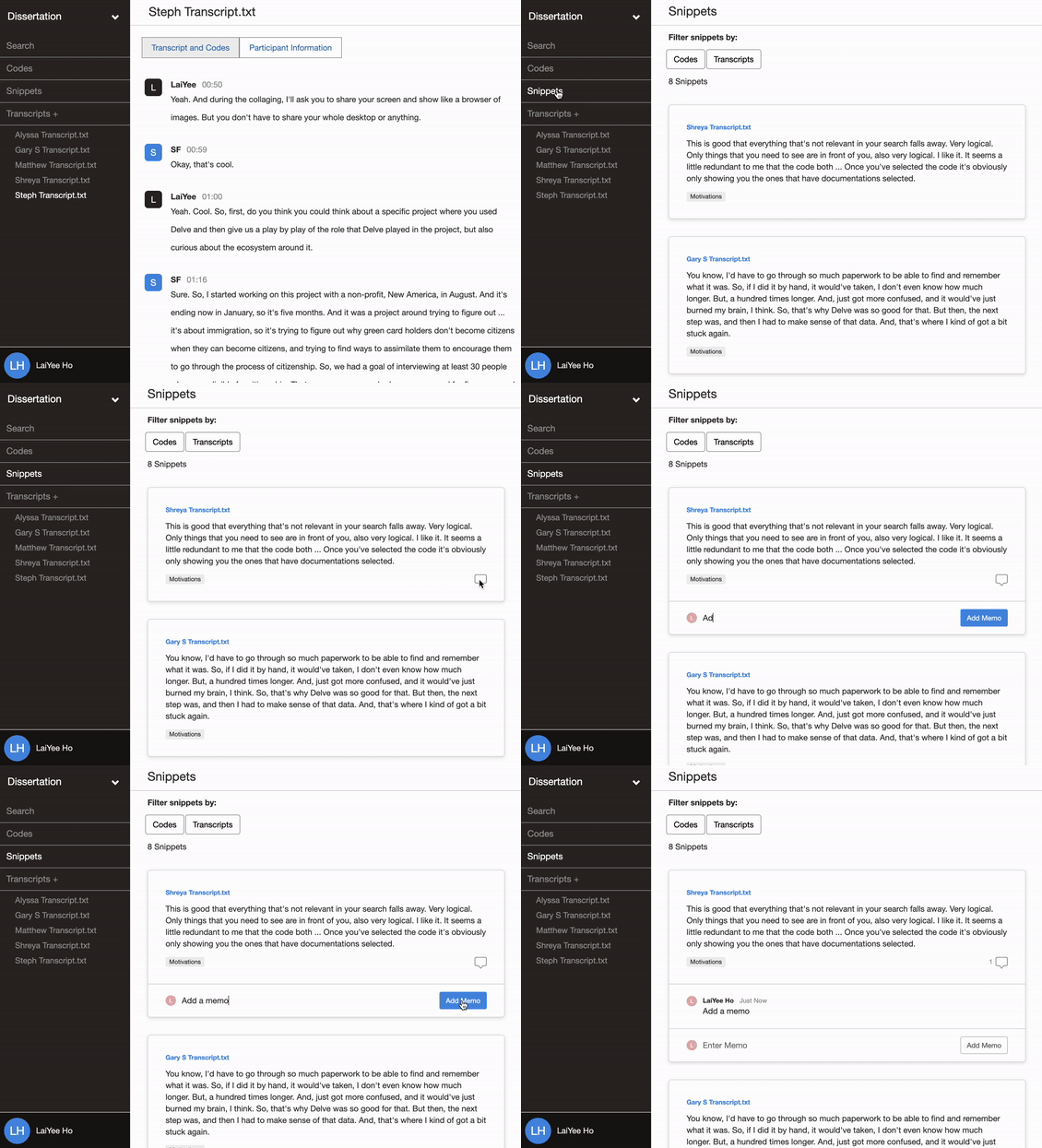
But capturing rich context is only half the challenge. You also need a way to organize it so those observations are easy to find, connect, and use when it’s time to write.
How Delve keeps your results transparent and transferable
Delve helps you keep that record organized from the beginning. Memos attach directly to the relevant data, making it easy to revisit the context behind your observations. Instead of piecing you participants and setting together weeks later, you have a clear, traceable trail to draw from when you sit down to write.
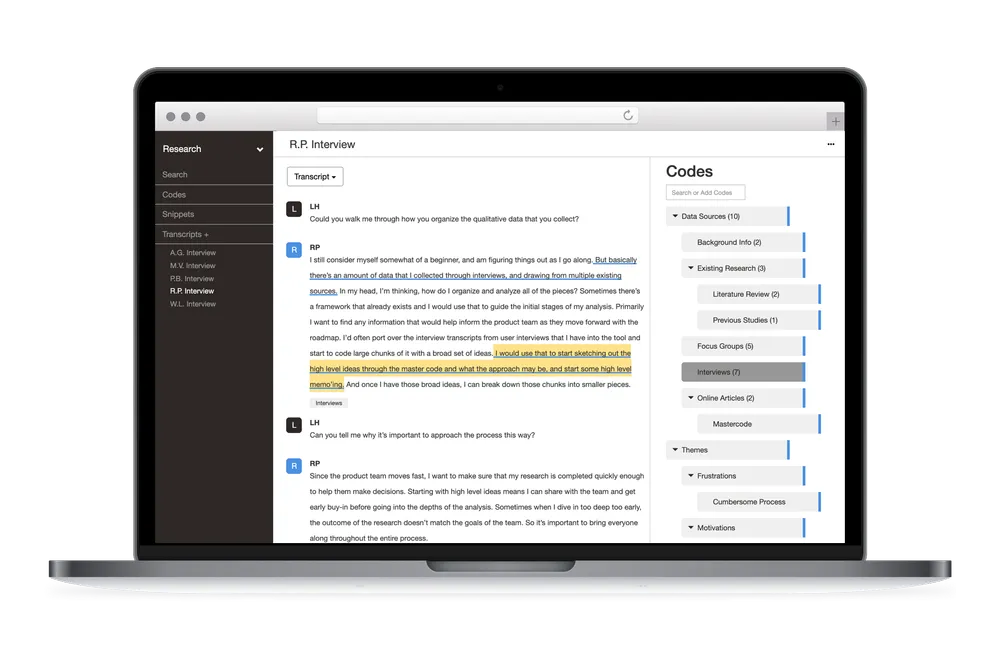
That’s the practical core of transferability. Keep a rich enough record as you go, and the write-up that lets others judge your work becomes something you assemble rather than something you scramble to recall.
Start a free 14-day trial of Delve and keep your context organized from the first transcript.
References
- Lincoln, Y. S., & Guba, E. G. (1985). Naturalistic inquiry. SAGE Publications. https://books.google.com/books/about/Naturalistic_Inquiry.html?id=25lpzgEACAAJ
- Braun, V., & Clarke, V. (2022). Thematic analysis: A practical guide. SAGE. https://us.sagepub.com/en-us/nam/thematic-analysis/book248481
- Schwarz, T., Schmidt, A. E., Bobek, J., & Ladurner, J. (2022). Barriers to accessing health care for people with chronic conditions: a qualitative interview study. BMC Health Services Research, 22(1), 1037. https://doi.org/10.1186/s12913-022-08426-z
- Smith, J. A., Flowers, P., & Larkin, M. (2022). Interpretative phenomenological analysis: Theory, method and research (2nd ed.). SAGE. https://books.google.com/books/about/Interpretative_Phenomenological_Analysis.html?id=jzuLzgEACAAJ
Cite this article
- Delve, Ho, L., & Limpaecher, A. (2026). Transferability in qualitative research: What it is and how to write for it. https://delvetool.com/blog/transferability-in-qualitative-research