This is part of our Ultimate Guide to Comparing Qualitative Software | Take Our Free Online Qualitative Data Analysis Course | Start a Free Trial of Delve
NVivo has been the recommended tool in doctoral programs for some time. Advisors mention it, university libraries list it as a recommended resource, and methodology courses tend to treat it as a default starting point for qualitative analysis. That reputation has been built over decades.

But if you’re a dissertation student working on a deadline and a budget, NVivo’s learning curve and price are real obstacles. This article looks at why, and at how Delve is a more user-friendly alternative.
Where NVivo runs into trouble for dissertations
A dissertation is largely your own work. Your advisor and committee provide guidance, but the analytical work falls to you, usually in whatever hours you can carve out. The same depth and power that makes NVivo so well-regarded tends to work against you here:
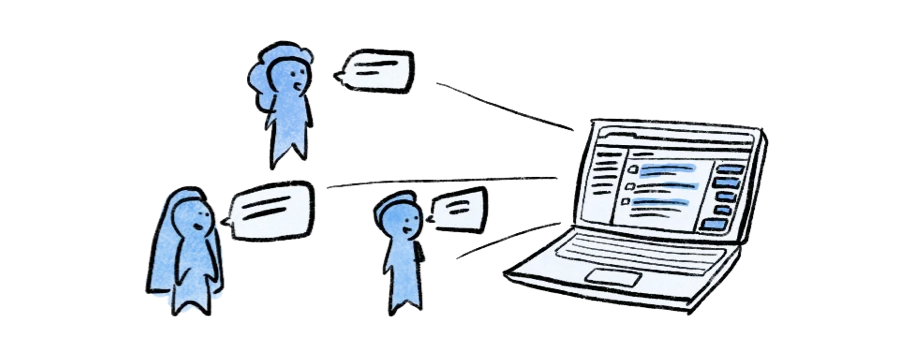
- Steep learning curve. Researchers consistently say NVivo needs “a whole course to learn.” When you are already managing fieldwork, writing chapters, and responding to committee revisions, weeks of training before you can start coding is time most students cannot spare.
- The cost. A full license runs $1,195+ per year. Students without institutional access pay that themselves. And if your analysis extends past graduation or you need to revisit the data for revisions or publications, re-accessing data turns into a separate problem to solve.
- Sharing with your advisor. With NVivo, bringing an advisor or other peer debriefer into your project means managing files, versions, and in some cases licenses. One professor shared “any time I would upload the project to the cloud it would work for about a day and then corrupt.” That kind of instability sets you back when you need quick, clean feedback from a committee.
This doesn’t mean NVivo is the wrong tool for everyone. There are just more options now, and some of them have been designed around the kind of focused, time-crunched research a dissertation involves.
An easy NVivo alternative for dissertation research
Delve is a web-based qualitative coding tool used by dissertation students at Columbia, Michigan, NYU, USC, and more. You don’t need to install any software, there is no desktop license, and there’s nothing to configure or set time aside for before you start. You can upload your transcripts and get right to work.
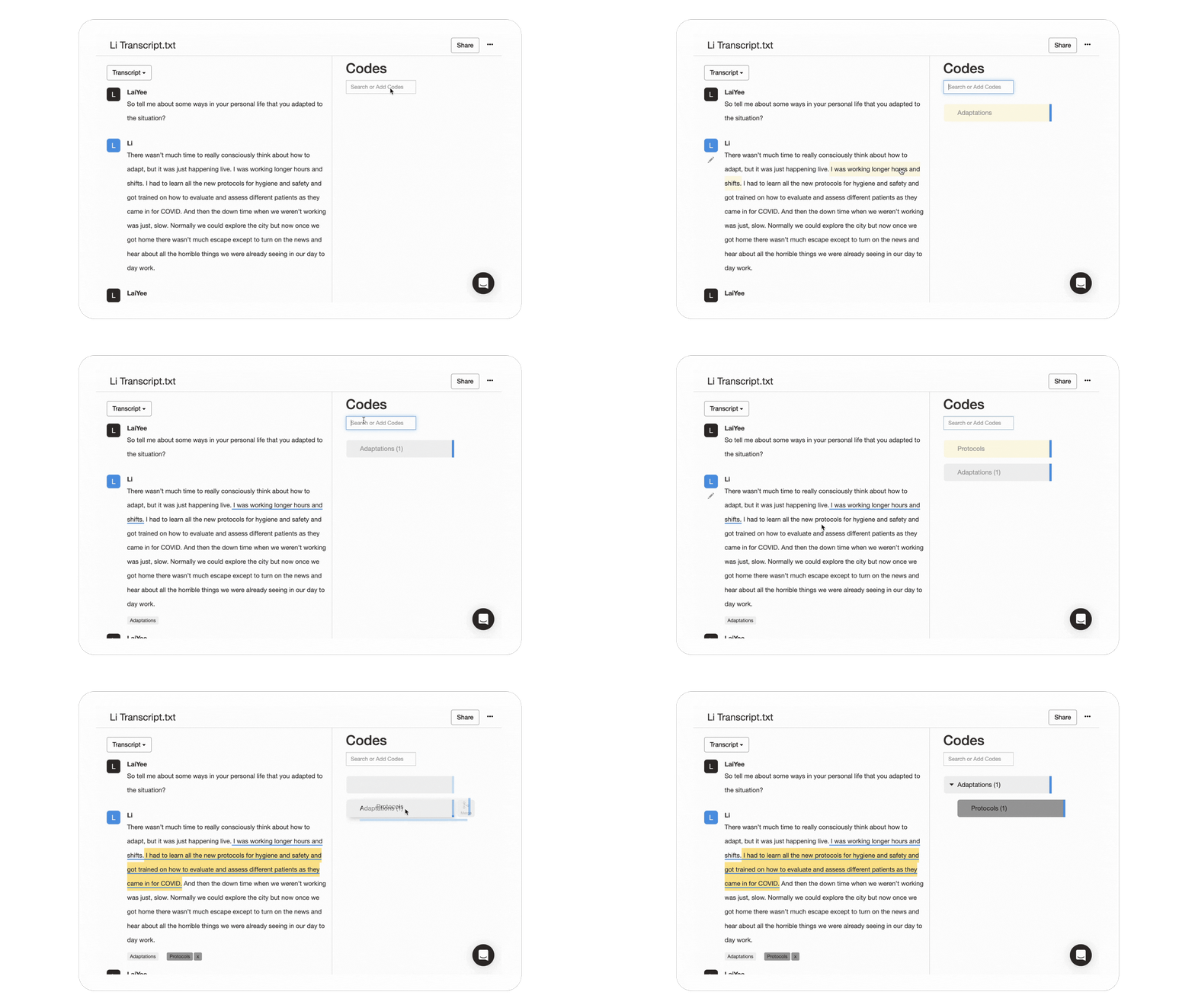
Researchers like Dr. Katherine Miller used Delve for her dissertation at the University of Pennsylvania. She had 18+ hours of recordings and interviews to get through. She chose Delve to keep on top of it, moving codes around as her thinking shifted and using snippet counts to see where themes were too thin.
As she puts it: “Delve allowed me to sort my codes to combine them into these bigger ideas or to tease them apart as I was going through this process.” In the end, she successfully defended her dissertation.
That’s the consistent user experience. One researcher shared: “Delve was my ‘go-to’ tool as I completed my dissertation.” A doctoral candidate added that Delve helped “quickly cross my dissertation finish line.” The analysis flows into the writing without the software becoming a project in itself.
Start qualitative coding today, not after days of training
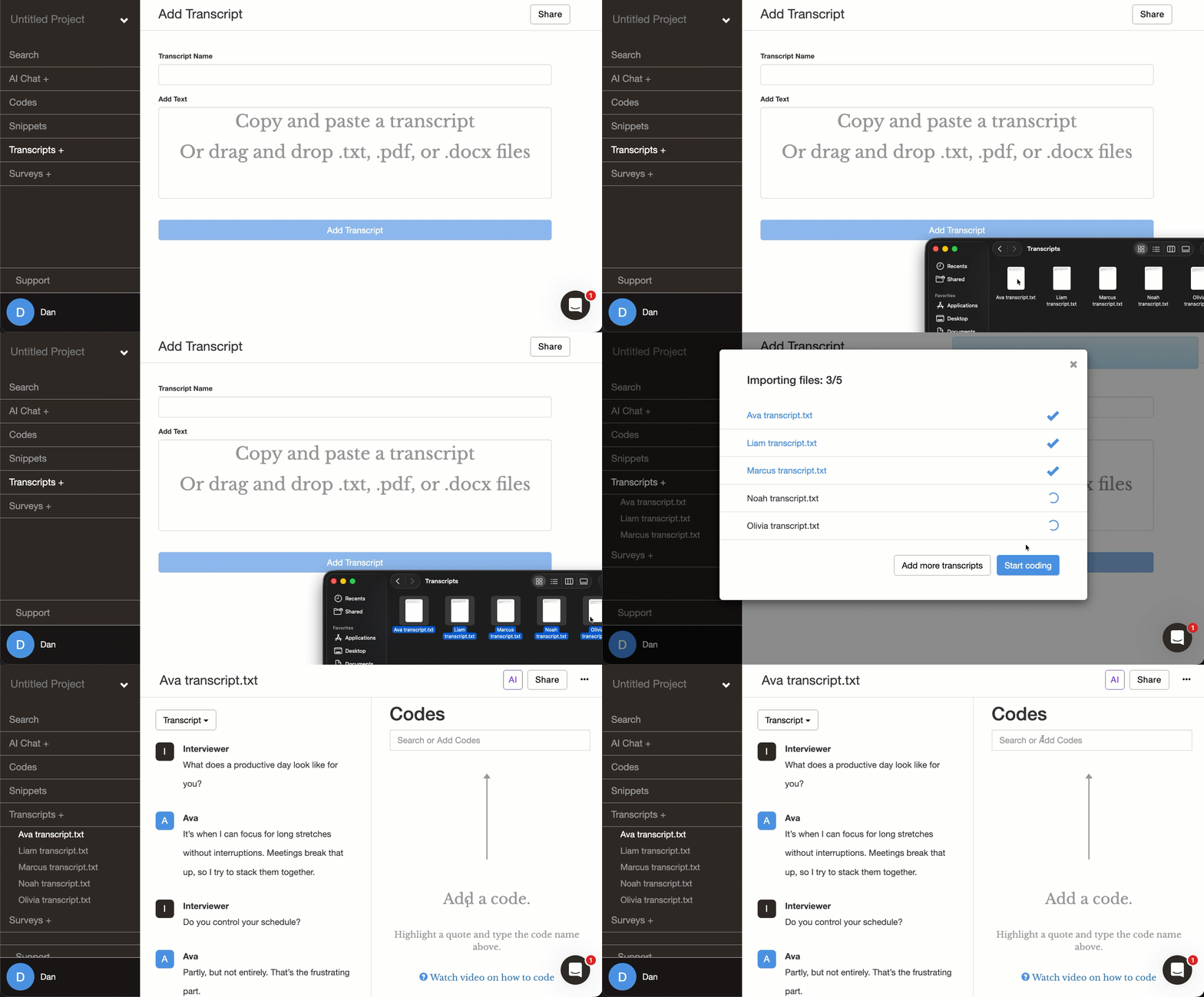
Between interviews, IRB approvals, and everything else, one doctorate candidate had no time left to learn complicated software. With Delve you create an account, upload your transcripts, and start coding in minutes. As she put it: “Delve is so user-friendly my niece could code.”
Another doctoral student wrote that the tool “cut my analysis time in half.” A graduate researcher found it made his defense easier beyond just his analysis. He was able to pull up his coded transcripts directly to show his committee the evidence behind each theme, adding his professors were impressed.
Easy, fast, and free to share your work
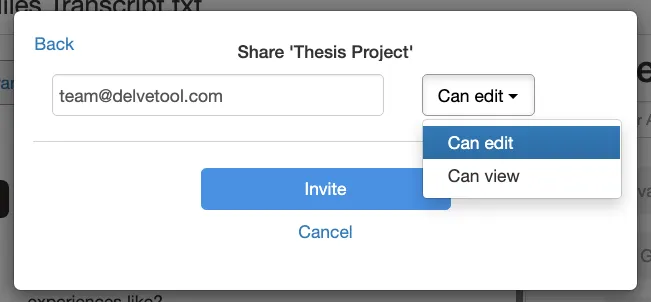
You can share your Delve project with your advisor, committee members, or a peer debriefer in two clicks. Delve’s collaborative features give you customized permissions for every role, from peer debriefer to dissertation chair. View-only for anyone reviewing your work, edit access for anyone coding alongside you. And if your methodology requires it, Delve generates intercoder reliability scores automatically.
Several students came to Delve after struggling with NVivo specifically. One student described it as cheaper and easier to navigate. A Ph.D. candidate who tried several other tools put it simply: “The Delve platform is exactly what I need where others were overwrought and too expensive.”
An interface that supports your thinking
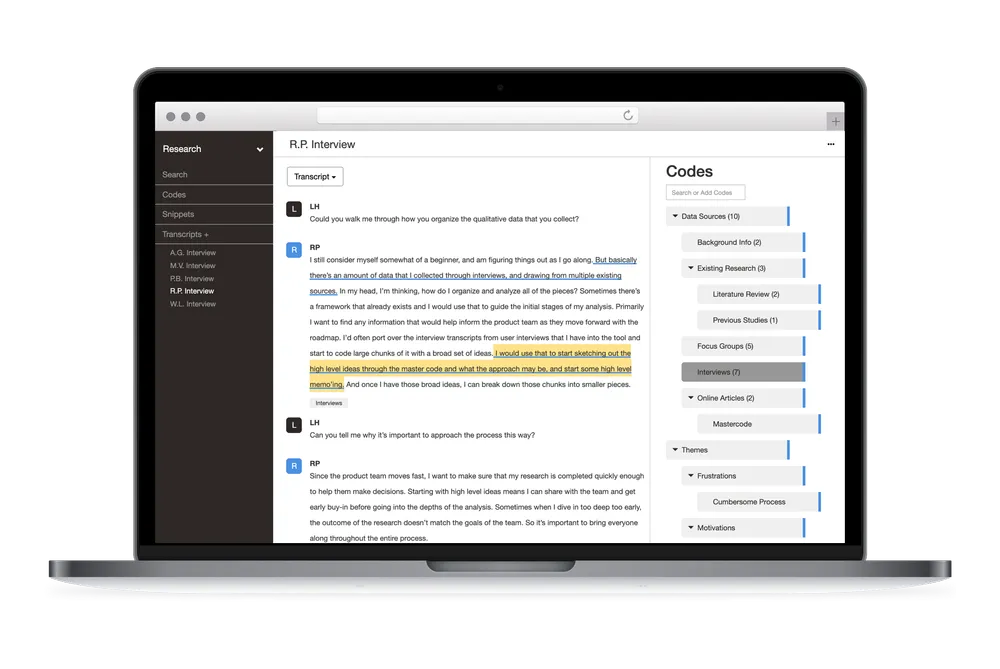
Your transcripts, codes, and descriptions are always front and center. You can nest codes as themes develop, merge them when your thinking consolidates, and reorganize everything as your analysis evolves. Dr. Miller at UPenn used the drag and drop coding feature while managing her 18 hours of workshop recordings. As a visual learner, she found the interface made her “thinking a lot easier.”
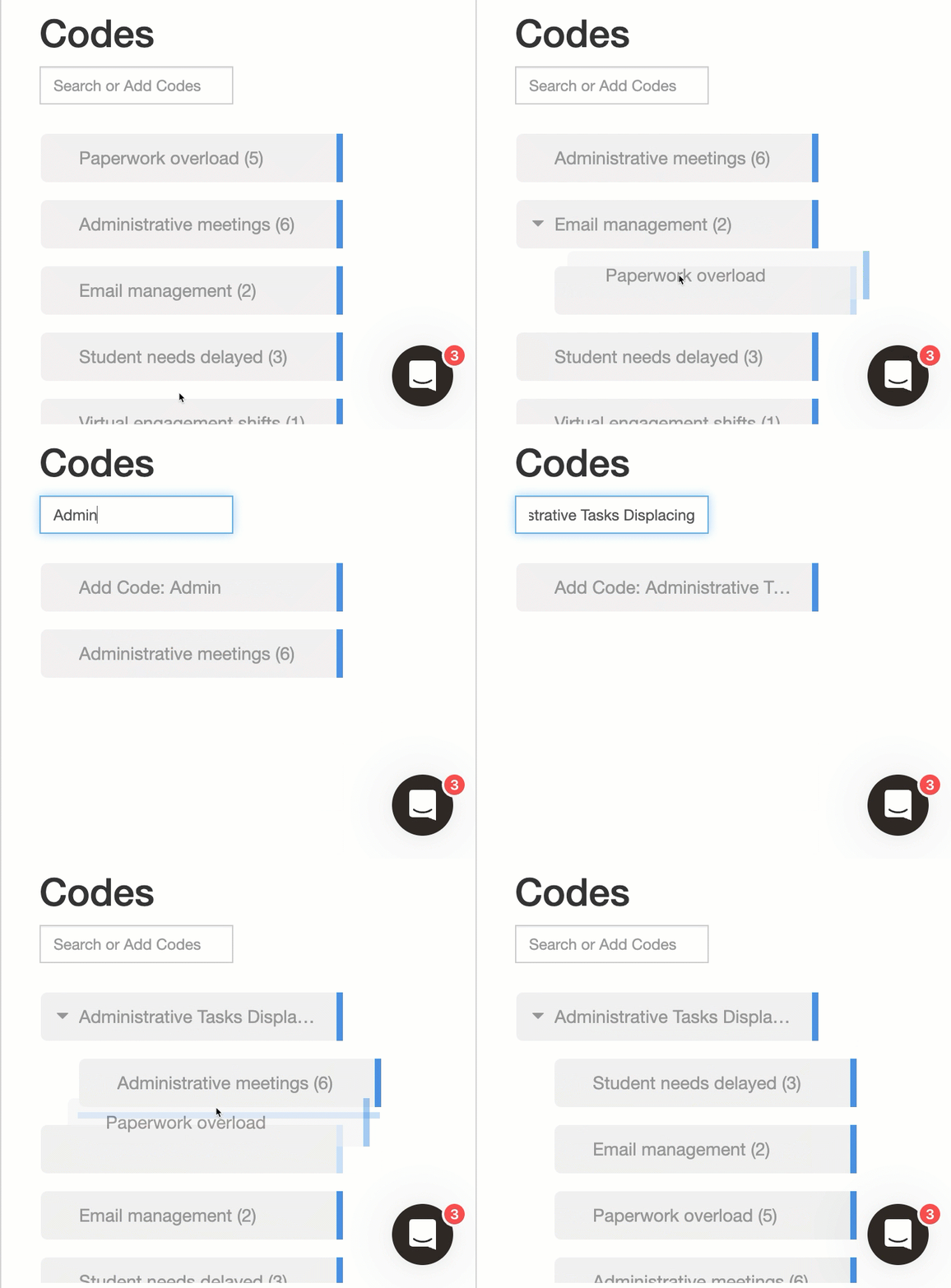
One doctoral researcher managing 178 pages from 16 interviews described their experience: “Being able to rename and move codes around as needed. The codebook that was automatically created is a godsend.”
After getting frustrated with other coding tools, another student and her classmate went looking for something that would just let them work. “We both wanted a software that was intuitive and user-friendly to code our dissertation research transcripts, and Delve is it.”
Pricing that fits a student budget
The education pricing is $18/month per user. You pay during active analysis months and pause when you’re back in fieldwork or working elsewhere. There is no contract or year-long commitment.
An assistant professor described how it works for her and her students: “So reasonable it works equally well for students just learning to code and for seasoned researchers.” She paused her membership between projects and picked it back up when she had new data to work through.
A Dean of Students finishing her own doctoral dissertation described it simply as “priced well for a doctoral student and easy to set up for my specific needs.” Another user on the flexible pricing: “I could pay for the time I needed without being locked in for longer than required.”
Table: NVivo vs. Delve for dissertation research
| Feature | Delve ✓ | NVivo |
|---|---|---|
| Setup time | Under 10 minutes | 5–7 days |
| Pricing | $18/month (student pricing) | $1,195+/year |
| Web-based | Yes | No |
| Learning curve | Minimal | Steep |
| Advisor sharing | View or edit access, 2 clicks | File management required |
| Best for | Dissertation students, solo researchers | Large-scale funded research |
Want to dig deeper into your options?
Our ultimate guide to qualitative software covers seven major platforms across the factors that matter most to researchers. If ease of use is your main concern, the easiest QDA software comparison gives you a direct breakdown. You can also find a detailed feature matchup in the NVivo vs. Delve comparison.
For additional support or help learning specific methodologies, the Learning Center includes how-to guides and other helpful resources for new researchers.
Try Delve for your dissertation
Dissertation students just need software that’s fast to start, easy to navigate, simple to share with an advisor, and affordable enough to not think twice about. You want a tool that fits around the research, not the other way around.
One researcher who had used NVivo before described the shift: “I was a bit scarred by some earlier products (NVivo) that were so time consuming and demanding. Delve is a breeze to use.”
Start a free 14-day trial and see how easily Delve handles your transcripts and coding process. There’s no credit card required, and you can invite your advisor to review your work from day one.
Frequently asked questions
Can I do rigorous qualitative analysis without NVivo? Yes. NVivo is one option for qualitative coding, not the standard. Researchers at leading universities use a range of qualitative tools including Delve. The rigor of your analysis comes from your methodology, how consistently you apply it, and how well you know your data more than from which software you use. Many dissertation students find that simpler tools keep them closer to their data rather than managing the software itself.
What’s the cheapest alternative to NVivo for dissertation research? Taguette is free and open-source. Delve runs $18/month on the student plan with no annual commitment, so you pay during active analysis months and pause during fieldwork or writing phases. NVivo starts at $1,195/year for a full license. If your university provides institutional access, NVivo might be free to you. If not, the price gap is significant.
How do I share my analysis with my dissertation advisor? In Delve, you invite your advisor by email from within the project and set their permission level. They can view your transcripts and coded data, leave comments, or code alongside you depending on what you choose. There’s no file transfer, no version syncing, and nothing for them to install.
What if I need to revisit my data after graduation? NVivo stores your data in a proprietary desktop file. If your license expires after graduation, getting back into your data becomes a real problem. Cloud-based tools like Delve store everything online, accessible through any browser as long as your account is active. For post-defense revisions or future publications from the same dataset, that flexibility matters more than most students anticipate.
Is there a learning curve with Delve if I’ve never used QDA software before? Most new users start coding within 10–15 minutes. The workflow is straightforward: upload a transcript, highlight text, assign a code. Delve also offers a free qualitative coding course and short training videos if you want to build some foundational skills before you dive in.
More comparison articles
Other ways to compare qualitative software
- Best QDA Software for Collaboration
- Best QDA Software Customer Support
- Best AI Features in QDA Software
More NVivo comparisons
- ATLAS.ti vs. NVivo vs. Delve
- MAXQDA vs. NVivo vs. Delve
- Dedoose vs. NVivo vs. Delve
- NVivo Cloud Collaboration: Is It Worth It?