This is part of our Ultimate Guide to Qualitative Software | Start a Free Trial of Delve | Take Our Free Online Qualitative Data Analysis Course
Let’s say you’re studying a topic you plan to measure with a survey. The trouble is you can’t write a survey yet, because there isn’t enough data available to know what to ask. Rather than guessing, you need to talk to people to figure that out. Otherwise you risk measuring the wrong things entirely.
Exploratory sequential design puts the qualitative interviews first. Participants tell you what really matters about your topic, then you build the survey from what you learn. The interviews tell you what to ask before you put questions to a whole population.

This design is called mixed methods research that combines qualitative and quantitative data in one study. The entire project depends on how well you code those interviews at the outset, which is why researchers turn to a tool like Delve that keeps every code and theme linked to the exact quotes they come from.
Exploratory sequential design moves from specific to general
Exploratory sequential design moves in one direction, from the person to the population. The exploring part is inductive analysis, where you reason upward from individual accounts toward a broader claim that applies to more people. This bottom-up approach fits research where you don’t yet know which factors matter most, so you interview people to find out before you write any survey questions:
- Start with the qualitative story (QUAL). You gather detailed accounts from a small number of participants. You get themes, patterns, and the words people use to describe their experience.
- Build the bridge. You turn those themes into something standardized in a survey, so the codes from your interviews become data-driven questions.
- Scale it up (QUAN). You test that survey on a large sample and the output is statistical in a way you can generalize to a wider population.
.C_VEkuye_1DT7qd.webp?dpl=dpl_9xWstzPuJaMBEtUp5sNWrkoonfGN)
If you already have the survey to use at the start of your project, explanatory sequential design flips the order of operations. It opens with those broad results, finds a surprising pattern, then follows up with interviews to explain it. Both designs pair interviews with a survey, and only the sequence changes, which is why the two names get mixed up so often.
When to use exploratory sequential design
The term comes from Creswell and Plano Clark (2007), who mapped out the main mixed methods designs and gave this one its name. They suggest the exploratory design route when:
- The variables are still unknown. You don’t yet know which factors matter, so you talk to people first to learn what belongs on the survey.
- You’re developing a new measure. You want a survey, scale, or framework grounded in real accounts rather than assumptions or existing surveys.
- No usable instrument exists. Nothing measures your topic yet, or the tools that exist were built for a different population or setting.
So if you already have quantitative results and want to know why they came out that way, use explanatory sequential design instead.
Handoff is the hard part: From qualitative codes to survey questions
Building the survey means turning your codes into questions. As Creswell and Plano Clark explain, each question traces back to something a participant said. A code like “boundary erosion” turns into a statement such as “I answer work messages outside work hours,” which people rate from strongly agree to strongly disagree on a Likert scale. The survey comes straight from your codes, so its structure matches how you coded the interviews.
You build that structure in layers. Start with specific codes, then group related ones into broader themes, and those themes are what organize the survey. In the dental study example coming up next, there are three themes that turn into the three main sections of the survey. The codes under each theme turn into individual questions.
The hard part is keeping that structure intact while it grows. Delve qualitative software is made to hold it together. You highlight text, name a code, and keep reading all in one screen. As codes pile up, you drag and drop them under broader themes so the structure builds as your work. When a quote raises a question you want to revisit, you attach a memo to it. By the time you write the survey, your themes are its sections and every code traces back to its quotes, so each question comes from real participant language and data.
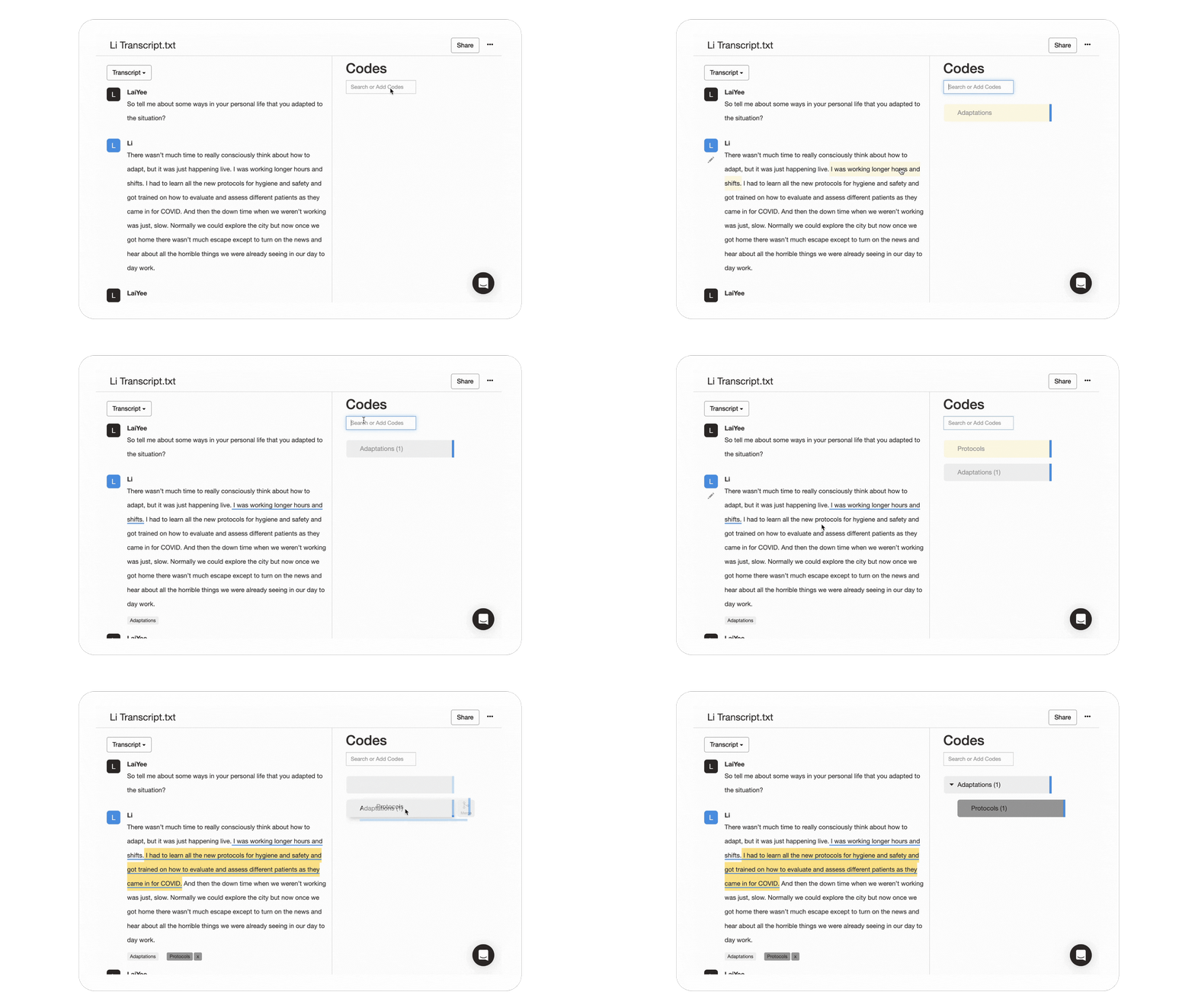
Delve can also streamline the survey side of the project. Once your codebook takes shape from the interviews, you can upload your survey results into the same workspace. You can then code the open-ended responses alongside your transcripts, so the qualitative work from both phases lives together.
Real example exploratory sequential design: How a published study built its survey from interviews
Let’s look at how the handoff works in a real study from a team of dental researchers. The group wanted to understand what patients thought about oral screening for cancer before trying to measure it. Their research process followed the design step by step.
- Phase one, the interviews. The team interviewed forty dental patients for about an hour each, taking a grounded theory approach. After every interview, they reviewed their notes with the participant, a form of member checking where the team caught surprising contradictions. Some participants first said their dentist had screened them for oral cancer, then acknowledged nobody had ever told them such an exam existed.
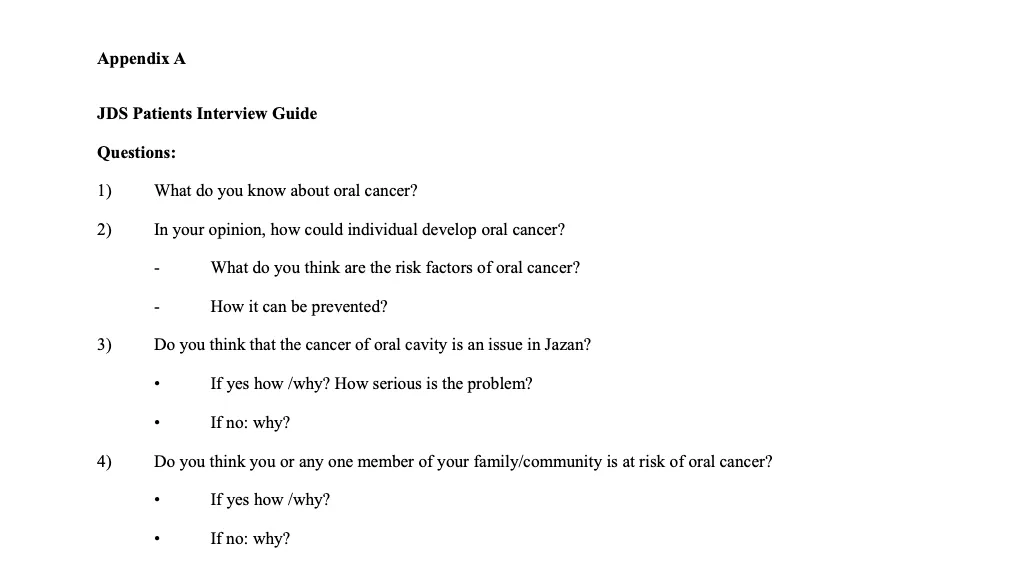
[Appendix A, JDS Patients Interview Guide, from Jafer et al. (2021) Source: Interview guide from Jafer et al. (2021), published in IJERPH under CC BY 4.0.]
- The qualitative coding. The team grouped similar responses into initial codes, refined those into focus codes, and developed the focus codes into theoretical ones. The final trio of themes covering what patients knew, how they perceived screening, and what they and their dentists actually did about it. They coded the data by hand, though a tool like Delve would have spared them the manual grouping and given them a shared location to collaborate on the work. \
- Phase two, the survey. Each of the three themes became a section of the questionnaire. One section on what patients knew about oral cancer, one on how they perceived screening, and one on what happened in the dental chair. The finished fifty-five-item survey went to 315 patients to measure how widespread the beliefs and gaps were. The forty interviews shaped every question hundreds of patients ended up answering.
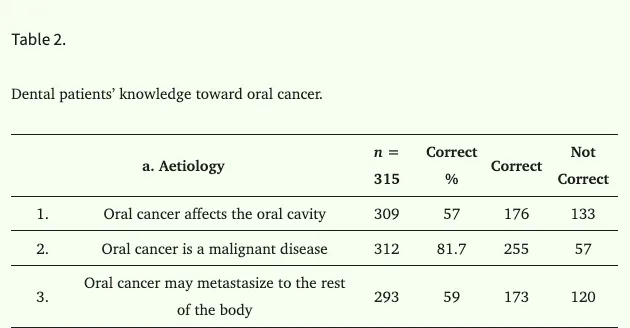
[Source: Jafer et al. (2021), published in IJERPH under CC BY 4.0. https://doi.org/10.3390/ijerph18147562]
The interviews produced every question on that survey. Because no software supported Arabic at the time, the team did all of that coding and structuring by hand. With a tool like Delve, that work happens as you code. Each snippet stays tied to its code and each code to the survey item it becomes. Keeping those links intact is what makes an exploratory study easy to defend, both to yourself and to the people reviewing it.
Table: Exploratory sequential design, and where Delve helps
It is easy to lose your place working across dozens of transcripts. Maybe code meanings drift as you read and reread transcripts, you lose track of which quote a survey item came from, and peer reviewers can’t follow or trust how you got from interviews to questions. Delve makes it easier to connect the dots.
| The problem | How exploratory sequential design solves it | How Delve helps |
|---|---|---|
| No existing survey fits your topic | Interviews reveal what belongs on the survey before you write it | Code the interviews to derive the themes your survey sections come from |
| You can’t show where a survey item came from | Each question traces back to coded participant language | Delve code descriptions link to the snippets behind them, so every theme traces to a quote |
| Code meanings drift across coders and weeks | A well-documented codebook holds definitions steady | Delve stores your codebook, keeping code names and definitions in one place |
| The handoff to survey design loses the narrative thread | The codebook becomes the blueprint for the survey | Upload your survey results into Delve and code the open-ended answers against the codebook you built from interviews |
Walk into phase two with a survey you can defend
An exploratory study is only as strong as its underlying qualitative coding. Unclear coding produces a survey that measures the wrong things, and a larger sample just repeats the error at scale. When the coding holds up, with each theme traceable back to the words behind it, the rest of the design follows.
Keeping that trail intact, from the first coded quote to the codebook you hand to your survey, is the problem Delve was built to solve. You can learn how to use the platform in an afternoon rather than over days of training, which is one reason real users rank it among the easiest QDA tools to learn.
Start a free trial and walk into phase two with questions you can defend.
Frequently asked questions
What is the difference between exploratory and explanatory sequential design? Exploratory runs qualitative first, then quantitative, moving from specific to general. Explanatory runs quantitative first, then qualitative, moving from general to specific. Same two strands, opposite order. Exploratory builds a measure from what people say. Explanatory explains numbers you already have.
When should I use exploratory sequential design? Use it when no existing survey fits your topic, when you’re developing a new instrument, or when you don’t yet know which variables matter. The qualitative phase tells you what to measure before you measure it.
What software helps with the qualitative phase? The qualitative phase runs on coding, so a tool built for that keeps your themes organized and traceable. Delve lets you code interviews, write code descriptions, and attach memos. You can also upload your survey results and code the open-ended answers against the same codebook.
Related resources
- Mixed methods research, an overview of combining qualitative and quantitative work
- Qualitative survey analysis, on coding open-ended survey responses
Citations
Jafer, M., Crutzen, R., Ibrahim, A., Moafa, I., Zaylaee, H., Ajeely, M., van den Borne, B., Zanza, A., Testarelli, L., & Patil, S. (2021). Using the exploratory sequential mixed methods design to investigate dental patients’ perceptions and needs concerning oral cancer information, examination, prevention and behavior. International Journal of Environmental Research and Public Health, 18(14), 7562. https://doi.org/10.3390/ijerph18147562
Creswell, J. W., & Plano Clark, V. L. (2007). Designing and conducting mixed methods research. Thousand Oaks, CA: SAGE Publications. https://www.researchgate.net/publication/238381559_Designing_and_Conducting_Mixed_Methods_Research_By_John_W_Creswell_and_Vicki_L_Plano_Clark_Thousand_Oaks_CA_Sage_Publications_2007_274_pp_7995_cloth_3995_paper_ISBN_1-4129-2791-9_ISBN_1-4129-2792-7
Cite this article
Delve, Ho, L., & Limpaecher, A. (2026, August 4). Exploratory sequential design: A practical guide. Retrieved from https://delvetool.com/blog/exploratory-sequential-research-design-delvetool