
This is part of our Ultimate Guide to Qualitative Software | Start a Free Trial of Delve | Take Our Free Online Qualitative Data Analysis Course
There is no single rubric or approach for evaluating qualitative research. Your professor or committee chair may tell you to address rigor, while the dissertations and journal articles you refer to offer different ideas. One might address “trustworthiness,” another “COREQ,” and a third discusses “quality criteria.”

While these frameworks differ in the details, they all answer questions about rigor, and whether you can show your reasoning. But reasoning is easy to lose track of. You can merge two codes early in a project, and six months later can’t recall why. Shorthand notes can be hard to decipher later. The problem is that you can’t show a reviewer something you didn’t write down clearly.
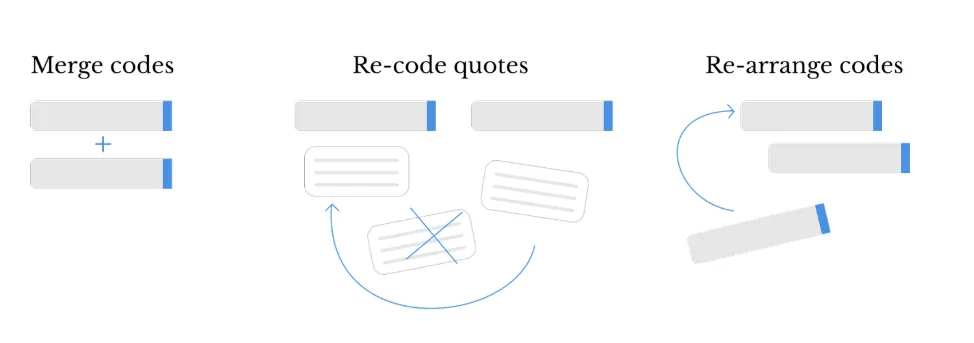
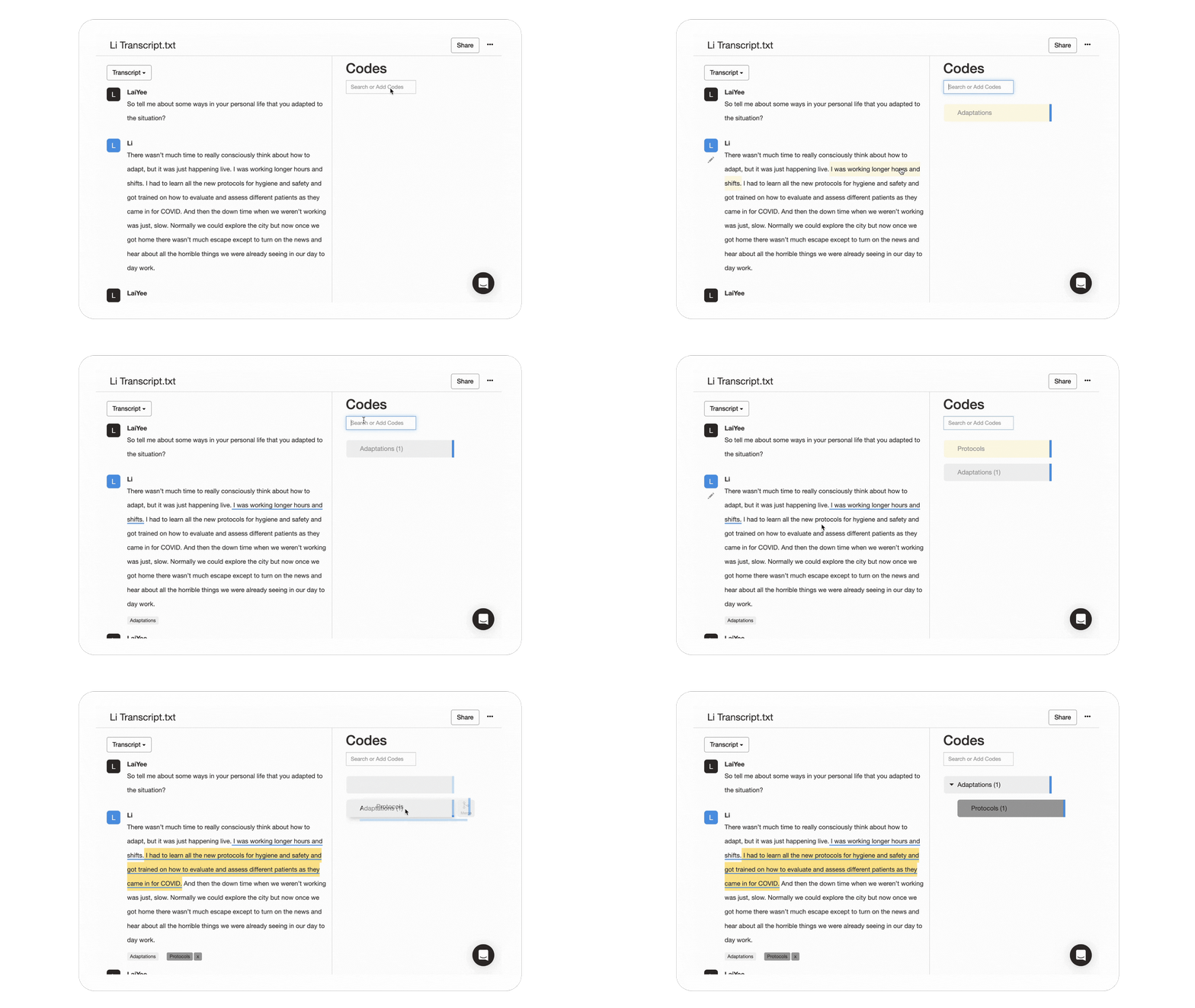
This article covers different criteria for evaluating qualitative research, how to tell one from another, and how qualitative analysis software like Delve holds your reasoning together while you work.
What is qualitative evaluation? Here’s what a research committee is really asking for in your results
Different people use different language when they ask about rigor and reasoning. What they are usually looking for is evidence that your interpretation is grounded in the data and that readers can follow how you reached it. For example, a supervisor, reviewer, or external auditor may ask:
.BRrJQsAE_Z1Sjd01.webp?dpl=dpl_ERESCkC5BzAKyvG6TjTCMrMtYS2C)
- “How do you know this is what your participants meant?”
- “Could someone else follow your process and see how you got here?”
- “Where did your own perspective come into this?”
- “Would this hold in a setting like mine?”
Answering these questions in your study isn’t about proving you were right as much as giving readers more reason to trust how you got there. Let’s look at the terminology researchers use to discuss these four questions, and the widely-cited framework that groups them together.
The four criteria for evaluating qualitative research results
Lincoln and Guba’s (1985) trustworthiness framework offers four criteria tied to the questions above, and each criterion corresponds to an established standard in quantitative research.
Quantitative analysis asks whether a measure captures what it claims and results repeat, which they call validity and reliability. They also ask whether the results are free of the researcher’s bias, which they call objectivity, and whether the sample represents a larger population. Since a qualitative study isn’t based on statistical data you measure, Lincoln and Guba kept the questions and changed what counts as an answer.
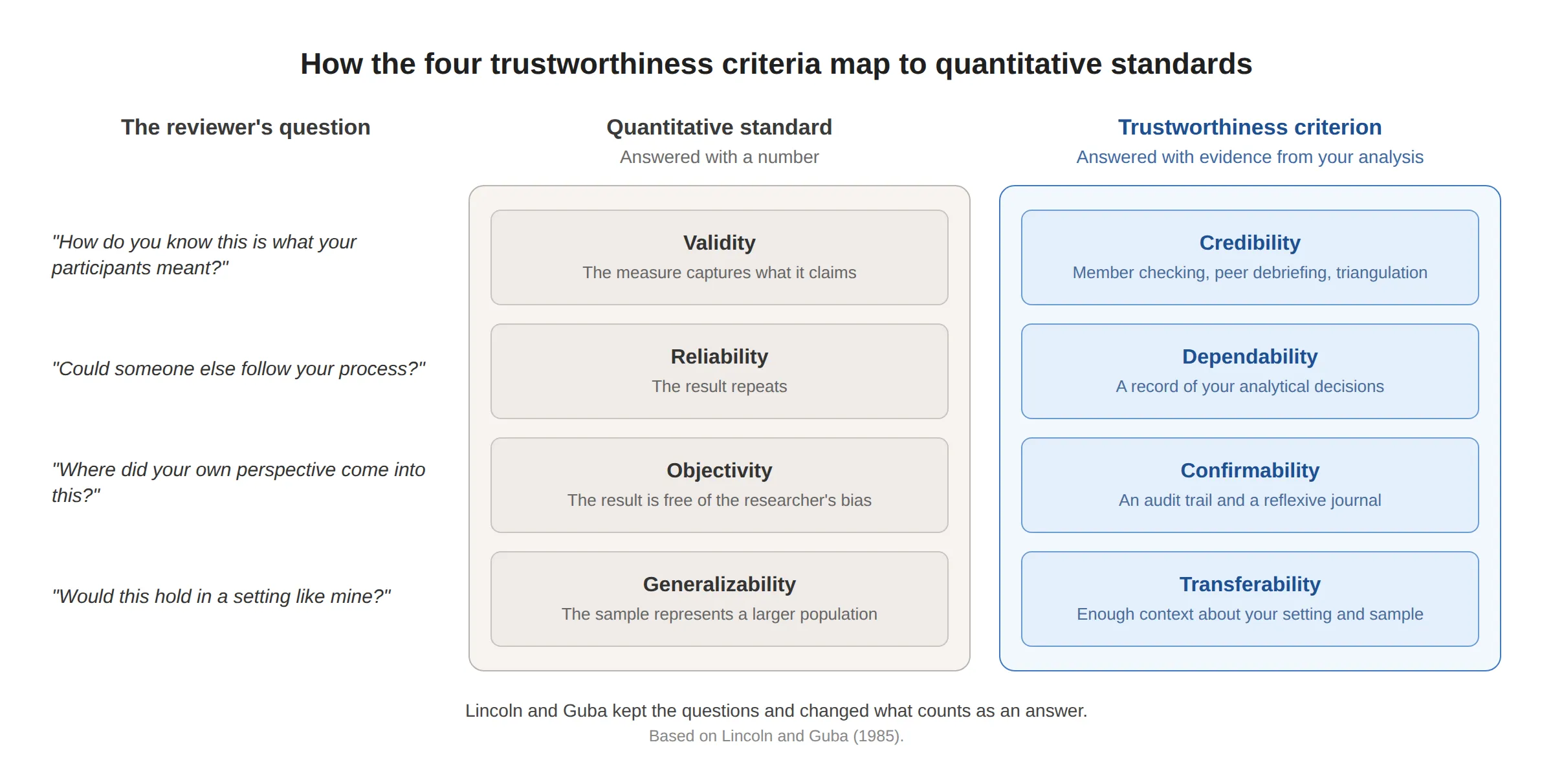
Each criterion addresses a different angle on your research:
- Credibility answers whether your interpretation matches what participants meant. You test your reading against people outside your own head through member checking, peer debriefing, or triangulation. A second analyst coding the same transcripts establishes researcher triangulation.
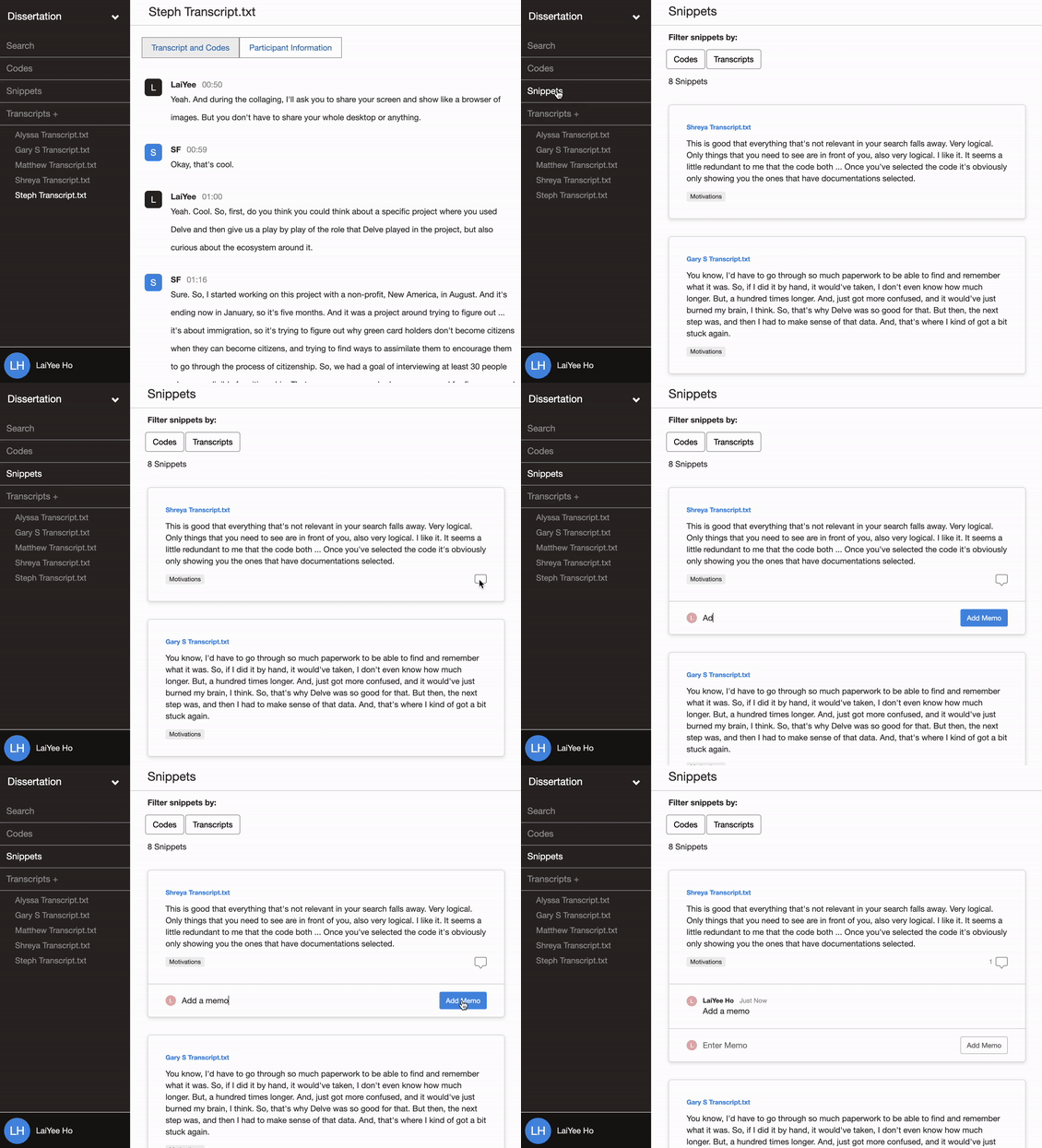
- Dependability tells readers whether someone else could follow your process. You keep a record of your analytical decisions as you make them. Writing memos in a qualitative tool like Delve holds those decisions in one place, including details about things like merging two codes.
- Confirmability answers whether the findings came from your participants rather than from your own assumptions or biases, the question Lincoln and Guba call neutrality. They ask for an “audit trail” for readers and a reflexive journal that records the assumptions you brought to the analysis.
- Transferability shows whether the findings would hold in a reader’s setting. You give enough context about your participants and research site for a reader to judge the fit.
These criteria often work together, and many qualitative studies address all four in the final results.
Other frameworks evaluate qualitative research differently. In Qualitative Evaluation and Research Methods, Patton (1990) calls for empathic neutrality, meaning you stay open to what the data shows while engaging closely with participants. Tracy’s (2010) eight “big-tent” criteria add questions like whether the topic was worth studying. This article focuses on Lincoln and Guba’s four criteria because they are used most often.
Qualitative researchers disagree on how to evaluate qualitative research
Confirmability is controversial because it depends on neutrality. Lincoln and Guba adapted it from objectivity, the positivist standard in quantitative research that any researcher should reach the same result from the same data. Lincoln and Guba’s version asks less of you, only that your findings came from what participants said rather than from your own biases.
.BeZ_juk4_2m50a1.webp?dpl=dpl_ERESCkC5BzAKyvG6TjTCMrMtYS2C)
Braun and Clarke (2020), psychologists who developed reflexive thematic analysis, doubt even that much neutrality is possible. In their method, you decide what the data means at every step. Two people can code the same transcripts and reach different conclusions, each with defensible positions. Braun and Clarke take a constructivist stance, meaning researchers create meaning rather than uncovering a hidden truth.
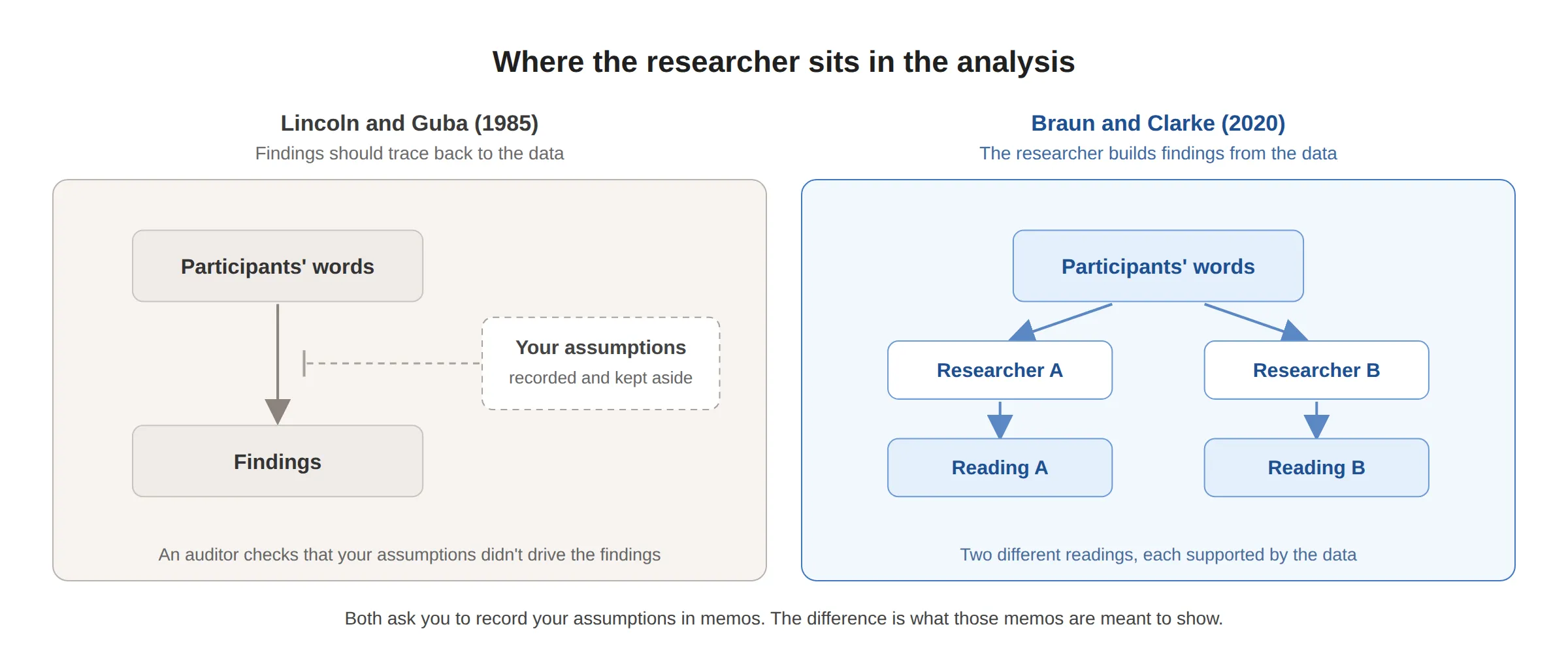
Bracketing is one place where the two positions part ways. The term comes from phenomenology, where it meant setting assumptions aside using memos. Lincoln and Guba want assumptions recorded so an auditor can check they didn’t drive the findings. Braun and Clarke want them recorded so a reviewer can see how they shaped the reading. In both cases, recording these memos in Delve keeps the note attached to the passage.
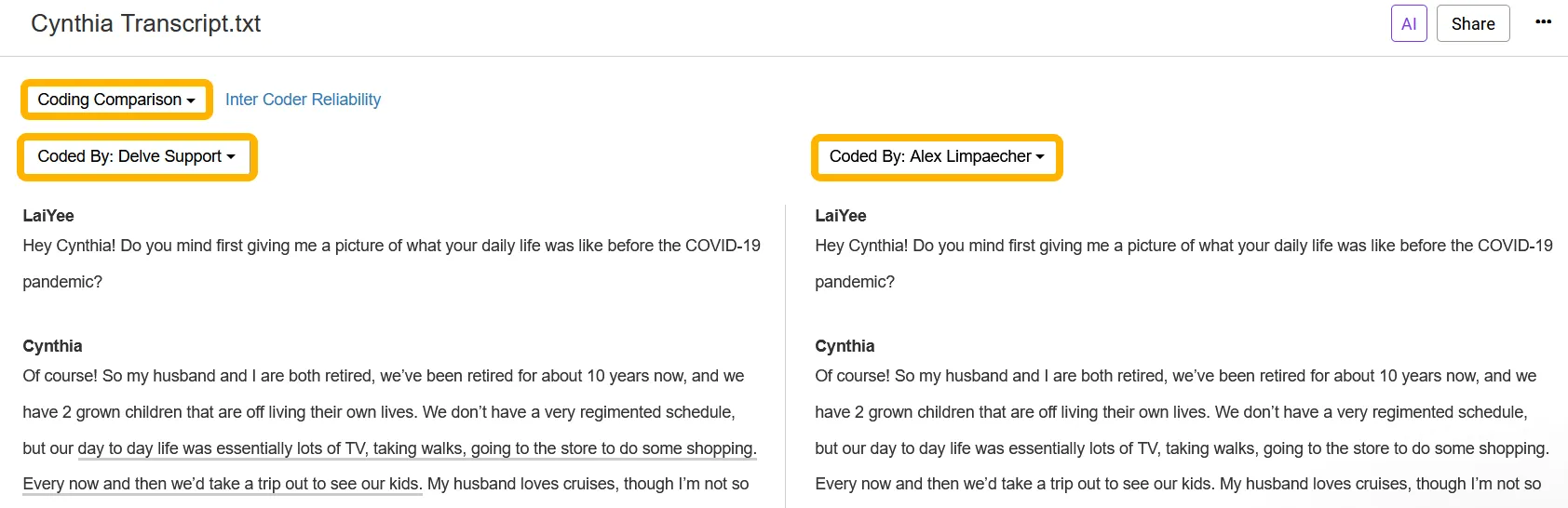
Intercoder reliability is another sticking point for the two camps. A reliability score treats disagreement between two researchers as an error to fix. Braun and Clarke advise against a reliability score for reflexive thematic analysis, since two different readings of a passage can deepen the analysis. When you’re working with a team, you can compare codes in Delve to see where two researchers coded a passage differently, so a team can calculate a score or talk through the difference.
Memos are your evidence in either case. With a deductive codebook, your memos show you applied each code the same way, which is Lincoln and Guba’s softer version of objectivity. With inductive coding, your memos show where your reading shaped a code or theme, which is Braun and Clarke’s constructivist view.
The important part is to name your approach in your methods section, so that reviewers read your memos and results the way you intend.
Which quality criteria apply to your study, and what counts as evidence
Three of the four criteria ask for the same evidence no matter how you coded. Whether you’re taking a deductive or inductive approach, you test your reading with someone outside the analysis (credibility), you track your decisions (dependability), and you give readers enough context to judge whether your findings fit their setting (transferability).
As we’ve seen, confirmability is the one that changes. Whether you treat neutrality as a goal decides what your memos need to show and whether you report intercoder reliability. The sections below walk through deductive coding, inductive coding, and studies that combine the two.
If you’re doing deductive coding with an existing codebook, use the full trustworthiness framework
Deductive coding means building a codebook before reading and coding your data. Content analysis and framework analysis tend to work this way. Your codes can come from an existing theory, an interview guide, or a first read of the transcripts, as long as you created the codebook before you applied codes to your transcripts.
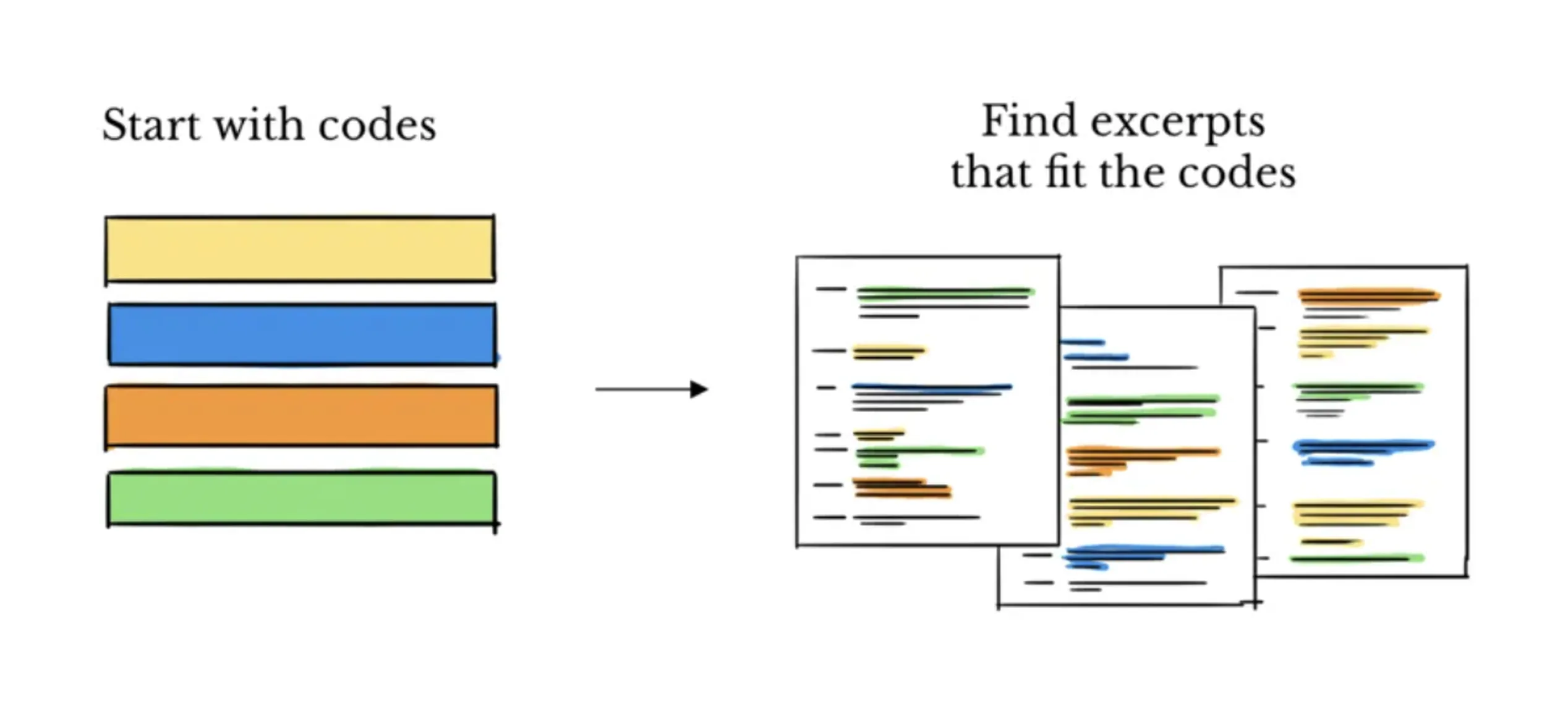
The trustworthiness framework fits deductive coding best, because Lincoln and Guba’s assumption that you can limit your influence is easiest to demonstrate when the codes were fixed before you coded. Elo and colleagues (2014) apply all four criteria to content analysis. The evidence for confirmability is the audit trail Lincoln and Guba ask for, which in a deductive study means the codebook, the definition of each code, and a record showing you applied those definitions the same way throughout. A reflexive journal completes it by noting the assumptions that shaped the codebook in the first place.

Intercoder reliability is sometimes expected on a deductive team project. If your committee or journal asks for an intercoder reliability score, report the score, say how you resolved disagreements through consensus or split coding, and note whether the codebook changed as a result. Delve lets you calculate intercoder reliability for each transcript and shows the passages where your team disagreed.
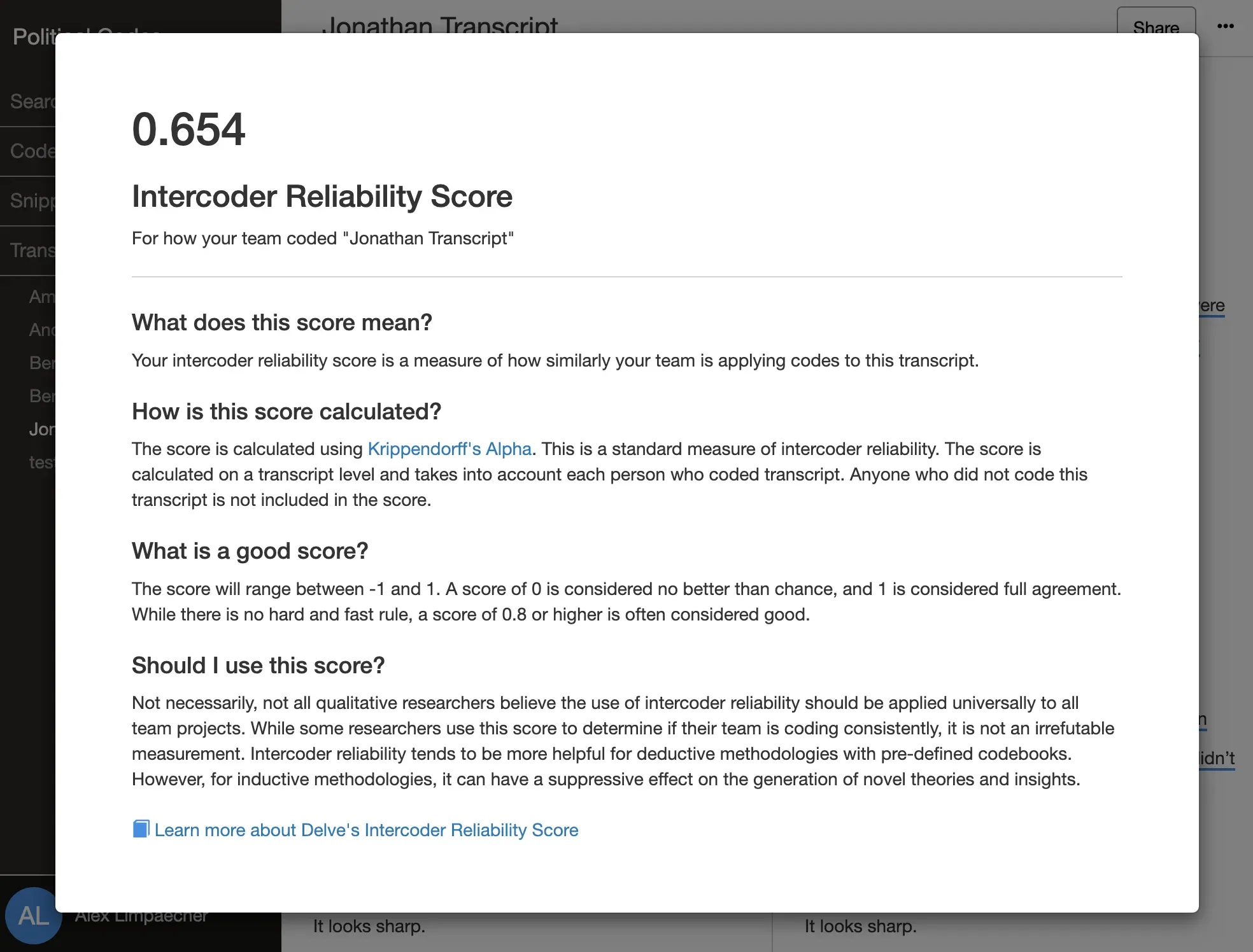
The coding comparison mentioned earlier gives you both halves of your confirmability claim. The score shows you applied the codebook consistently. A memo on each passage where your codes differed records how your team resolved or came to an understanding about inconsistencies.
If you’re doing inductive coding, confirmability is what changes most
Inductive coding means you build your codes from the data as you read in iterative rounds of reading and coding. Reflexive thematic analysis, IPA, narrative analysis, and grounded theory all work this way.
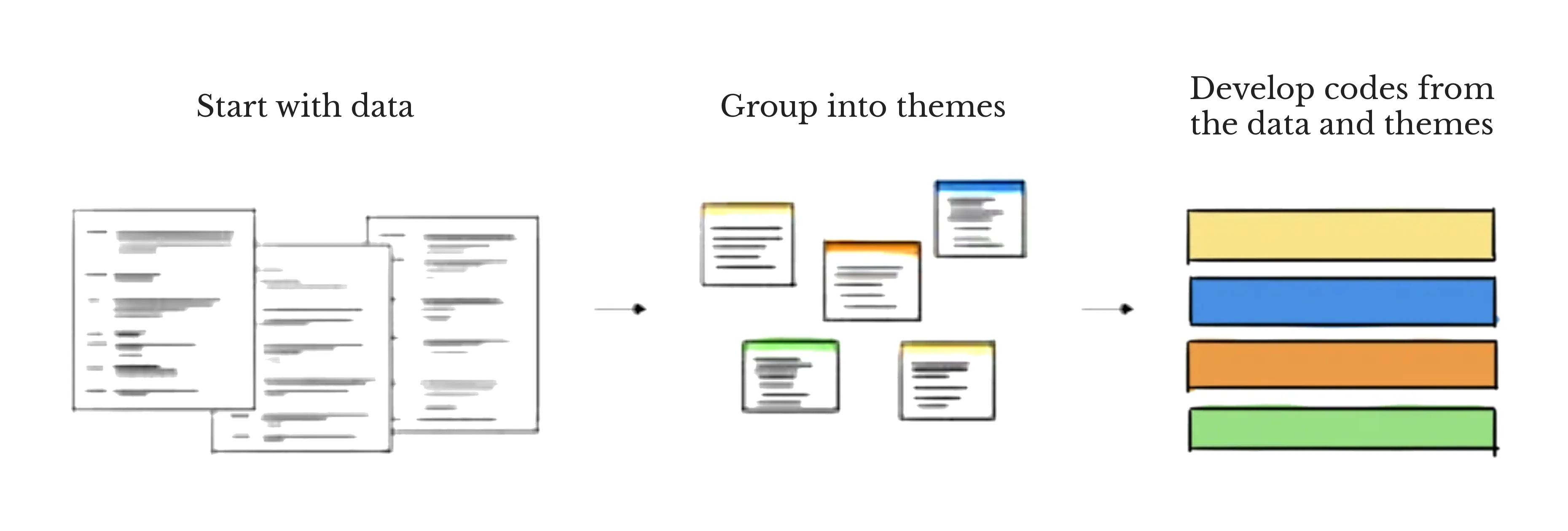
Credibility, dependability, and transferability work the same way they do in deductive coding. Member checking and peer debriefing still test your reading of your transcripts, and the audit trail still lets a reader follow your process.
But with confirmability, instead of showing how you limited your influence, you document where your perspective shaped the analysis. Your reflexive notes are the evidence. When a participant’s phrasing strikes you differently than you expected, Delve makes it easy to write a memo on that snippet, and the memo stays attached to the passage that prompted it so you can explain it later.
If you plan to work to Braun and Clarke’s standard, agree on it with your committee or professor at the proposal stage. The choice shapes what you record in your memos, whether you calculate intercoder reliability, and how you write up confirmability. Then name it in your methods section so a reviewer has context on how you used the memos
Intercoder reliability is optional in inductive coding. If someone asks for a score anyway, point them to the twenty questions Braun and Clarke wrote for evaluating thematic analysis manuscripts.
Table 1: How each coding approach reports confirmability and intercoder reliability
| Deductive | Inductive | |
|---|---|---|
| Typical research methods | Content analysis, framework analysis | Reflexive TA, IPA, narrative analysis, grounded theory |
| Where codes come from | A codebook mostly set before you code | Built from the data as you read |
| Neutrality | A goal | Not the goal, you create meaning |
| Confirmability claim | Your influence was limited by a fixed codebook applied consistently | Your influence shaped the reading, and you documented where |
| Evidence for it | Codebook, code definitions, coding comparisons, memos | Reflexive memos on the snippets that prompted them |
| Intercoder reliability | Sometimes expected on a team | Optional, sometimes counterproductive |
Ask before you decide. Nursing and health research often expect COREQ and sometimes intercoder reliability. Education and psychology more often accept a reflexive account. Your supervisor knows what your committee reads, and published work in your field shows what passed review. Delve’s research library is sorted by field, including education, nursing, and public health.
Rigor and quality come down to what you can show (and Delve can help)
For each of the four trustworthiness criteria, we suggest naming the method and what it produced. “We conducted member checking” conveys a step was taken. “Two participants disagreed with the workload theme, so we split it in two” shows the step changed your reading. The second shows more rigor.
The hard part is reconstructing those results from memory at the end of a project. The detail has to be in your notes from when you coded, and then the methods section is a matter of reading your own record back. Qualitative analysis software like Delve keeps that record while you work.
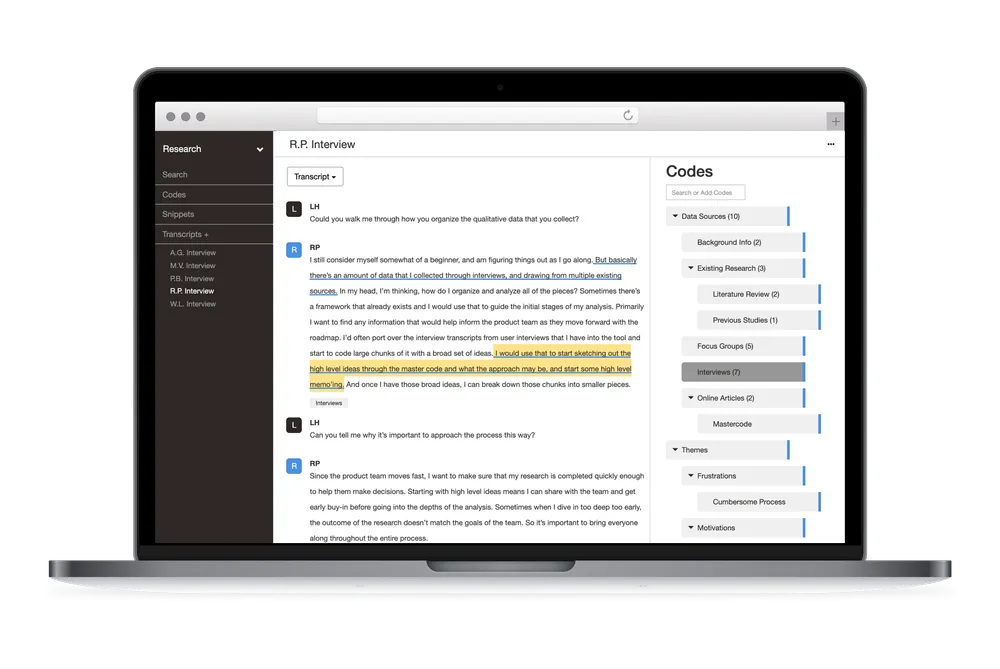
- For confirmability, Delve memos attach to the snippet or code that prompted them. Whether you’re showing your findings trace back or showing how your reading shaped the analysis, a reviewer checks your claim against the memo.
- For dependability, Delve’s code descriptions hold what each code meant as you applied it. Your codebook stays the one you worked from, not one you rebuilt at the end. A reviewer can follow your process straight from the codebook.
- For credibility, Delve lets you share the project with a peer debriefer or committee member for free, view-only. They can trace any theme down to the snippets under it. Your reading gets tested by someone outside the analysis.
- For transferability, you write a thick description of your participants and setting. This is the one criterion you compose rather than pull from Delve. A reader uses the description to judge whether your findings fit their own context.

When you use Delve for qualitative coding, you just import your transcripts, keep the record in one place, and you’ll have trustworthy evidence to point to when you finish. Hundreds of published papers, theses, and dissertations were coded in Delve. Start a free trial and build your record while you code.

Frequently asked questions
How do you evaluate qualitative research? You ask whether the findings represent participants’ reality, whether the process was documented well enough to follow, whether the researcher accounted for their own influence, and whether there’s enough context to judge fit elsewhere. Each question has established methods behind it, from member checking to audit trails.
What are the criteria for evaluating qualitative research? The most widely used set is Lincoln and Guba’s (1985) four trustworthiness criteria, which are credibility, dependability, confirmability, and transferability. Alternatives exist, including Tracy’s (2010) eight “big-tent” criteria, and some methods propose their own standards. Which set applies depends on your methodology and what your committee or journal expects.
What are quality criteria in qualitative research? Quality criteria are the standards a reader uses to judge whether qualitative findings can be trusted. Qualitative research has no single agreed set. Lincoln and Guba’s four trustworthiness criteria are the most common. Tracy (2010) proposed eight broader criteria, and Braun and Clarke (2020) wrote twenty questions for judging reflexive thematic analysis.
What is neutrality in qualitative research? Neutrality is the question of whether findings come from the data or from the researcher. Lincoln and Guba answer it with confirmability, which asks you to show your findings trace back to what participants said. Braun and Clarke doubt full neutrality is possible in interpretive methods, since the researcher decides what the data means at every step.
Is confirmability the same as objectivity? No. Objectivity is the quantitative standard that any researcher should reach the same result from the same data. Lincoln and Guba adapted it into confirmability, which moves the question from the researcher to the data. You don’t have to be neutral yourself, but an auditor should be able to trace your findings back to the transcripts.
What did Patton say about quality in Qualitative Evaluation and Research Methods? In the 1990 second edition, Patton argues that the researcher is the instrument in qualitative work, so a study’s credibility depends on the researcher as well as the methods. He calls for empathic neutrality, meaning you stay open to whatever the data shows while engaging closely with participants.
What does bracketing mean in qualitative research? Bracketing comes from phenomenology, where it originally meant setting your assumptions aside. Most researchers now use the term for noticing and recording your assumptions, often in reflexive memos. Lincoln and Guba use that record to show your assumptions didn’t drive the findings. Braun and Clarke use it to show how your assumptions shaped the reading.
What do positivist and constructivist mean for evaluating qualitative research? A positivist view treats findings as existing apart from the researcher, which is where objectivity comes from. A postpositivist view accepts some bias but works to reduce it, which fits deductive coding. A constructivist view holds that the researcher builds findings from the data, which is Braun and Clarke’s position.
Is COREQ a quality framework? No. COREQ and SRQR are reporting checklists. They specify what to disclose about your study, which is a different question from whether the study is sound. Many journals require one at submission, but completing one doesn’t replace addressing rigor in your methods section. Barbour (2001) made this point in the BMJ.
Do I need intercoder reliability? Your method decides. Intercoder reliability is sometimes expected in deductive, team-based research and by some journals. In inductive work like reflexive thematic analysis, Braun and Clarke advise against a score, since different readings of a passage can deepen the analysis. When you need one, Delve calculates intercoder reliability for each transcript.
What is the difference between reliability, validity, and trustworthiness? Reliability and validity come from quantitative research. Trustworthiness is the qualitative counterpart Lincoln and Guba proposed. Dependability stands in for reliability, credibility for validity, confirmability for objectivity, and transferability for generalizability. Our guide to reliability and validity in qualitative research covers how the terms translate.
Are there four criteria of trustworthiness or five? Four are standard. Lincoln and Guba proposed credibility, dependability, confirmability, and transferability in 1985, then added a fifth criterion, authenticity, in 1989. Authenticity asks whether a study fairly represents the range of realities among participants. Most studies and most journals still work with the original four.
When should I choose my quality framework? Choose it at the proposal stage, before you analyze any data, and agree on it with your committee. The choice shapes what you record in your memos, whether you calculate intercoder reliability, and how you write up confirmability.
How do you write about rigor in your methods section? Name each criterion you addressed, the method you used for it, and what that method produced. A member check that changed a theme is stronger evidence than a sentence saying member checking was conducted. Coding in a tool like Delve, where your memos and code definitions sit with the data, means you read your record back instead of reconstructing it from memory.
Related resources
- Trustworthiness in qualitative research, the four criteria and how to demonstrate each one\
- Credibility in qualitative research, on testing your reading against people outside the analysis\
- Dependability in qualitative research, on building an audit trail others can follow\
- Confirmability in qualitative research, on documenting where your own influence entered\
- Transferability in qualitative research, on giving readers enough context to judge fit\
- Reliability and validity in qualitative research, on how the quantitative terms translate
References
- Barbour, R. S. (2001). Checklists for improving rigour in qualitative research: A case of the tail wagging the dog? BMJ, 322(7294), 1115–1117.
- Braun, V., & Clarke, V. (2020). One size fits all? What counts as quality practice in (reflexive) thematic analysis? Qualitative Research in Psychology, 18(3), 328–352. https://doi.org/10.1080/14780887.2020.1769238
- Elo, S., Kääriäinen, M., Kanste, O., Pölkki, T., Utriainen, K., & Kyngäs, H. (2014). Qualitative content analysis: A focus on trustworthiness. SAGE Open, 4(1). https://doi.org/10.1177/2158244014522633
- Lincoln, Y. S., & Guba, E. G. (1985). Naturalistic inquiry. SAGE. http://dx.doi.org/10.1016/0147-1767(85)90062-8
- Patton, M. Q. (1990). Qualitative evaluation and research methods (2nd ed.). SAGE.
- Polit, D. F., & Beck, C. T. (2021). Nursing research: Generating and assessing evidence for nursing practice (11th ed.). Wolters Kluwer. https://nursology.net/resources/books/nursing-research-generating-and-assessing-evidence-for-nursing-practice/
- O’Brien, B. C., Harris, I. B., Beckman, T. J., Reed, D. A., & Cook, D. A. (2014). Standards for reporting qualitative research: A synthesis of recommendations. Academic Medicine, 89(9), 1245–1251. https://doi.org/10.1097/ACM.0000000000000388
- Tong, A., Sainsbury, P., & Craig, J. (2007). Consolidated criteria for reporting qualitative research (COREQ): A 32-item checklist for interviews and focus groups. International Journal for Quality in Health Care, 19(6), 349–357.
- Tracy, S. J. (2010). Qualitative quality: Eight “big-tent” criteria for excellent qualitative research. Qualitative Inquiry, 16(10), 837–851. https://doi.org/10.1177/1077800410383121
Cite this article
Delve, Ho, L., & Limpaecher, A. (2026, September). Evaluating qualitative research: The criteria your work gets judged by. https://delvetool.com/blog/evaluating-qualitative-research-which-quality-criteria